
FreeFlyer Engineering Team
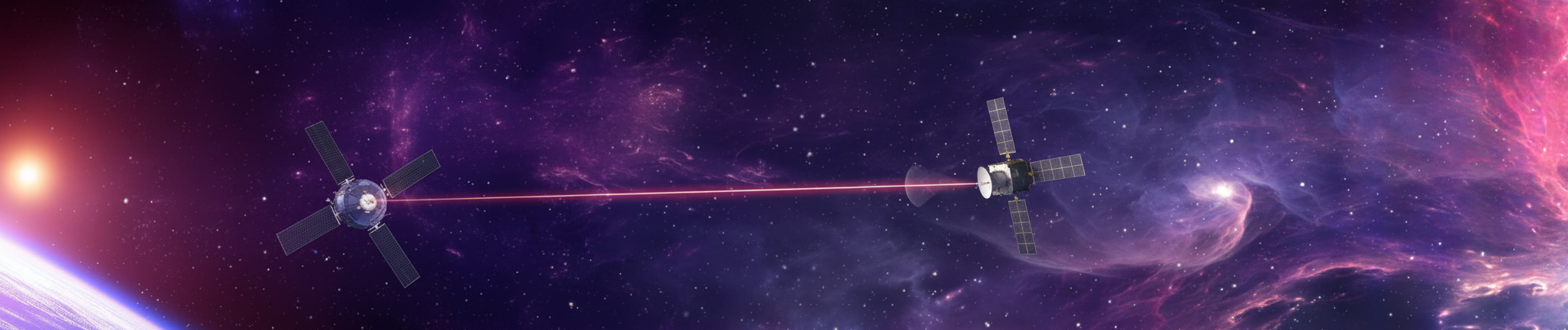
Interest in “data centers in space” has accelerated as AI power demands explode and launch costs fall. Google’s Suncatcher concept sits at the center of that conversation: cluster many solar-powered satellites in low Earth orbit, connect them with short-range optical links, and treat the whole flock as a single compute fabric. Planet and Google announced a partnership to flight-demonstrate Suncatcher technologies, starting with two Planet-built tech-demo satellites carrying Google AI processors, targeting launch by early 2027. This validates the near-term path from concept to on-orbit learning missions.
Key characteristics of Suncatcher
- Tight, periodic formation in LEO: A bounded HCW-designed cluster that “breathes” twice per orbit1, keeping relative motion predictable for safety and pointing.
- Short-range optical inter-satellite links (near-term demos planned)2: Meter–kilometer separations enable very high throughput and low internal latency; Google and Planet’s tech-demo mission is scoped to exercise these links in orbit.
- Sun-following power posture: SSO-like lighting and simple attitude rules maximize solar availability while supporting thermal constraints.
- Modular scaling: Dozens to ~81 nodes per cluster, with topology and spacing that can grow without redesigning a monolith.
- Planet will build and operate two prototype spacecraft for Project Suncatcher, equipped with Google’s TPU-class processors, to test compute and optical-link elements in LEO by early 2027. These demos are an on-ramp toward larger clusters like the HCW-designed formation we visualize below.
From paper sketch to working orbit in FreeFlyer
Our video below puts Figure 2’s1 HCW behavior on screen. We initialize the constellation in the natural Hill (RIC) frame, so each deputy’s position and velocity satisfy the HCW relationships, convert those states to inertial, and propagate all satellites together. The result is the same two-cycles-per-orbit chief-relative ellipse of the paper sketches. Once that baseline is behaving, we selectively introduce higher-fidelity effects (e.g., J2, drag) to observe the expected shape drift without letting numerics or controls overshadow the design point. This keeps the focus on constellation geometry and nearest neighbor spacing, which is exactly what drives optical pointing, safety margins, and radiator attitude windows.
What makes this fast is FreeFlyer. The Formation object lets you clone a chief state across tens to hundreds of spacecrafts in a few lines of script. Built-in RIC ↔ inertial conversions mean you can author geometry in the frame that makes sense and still propagate in full dynamics. Targeting and ΔV utilities allow quick station-keeping or point-to-point reshapes directly in RIC for what-if’s. And the ViewWindow controls turn the analysis into communication: synchronized chief-centric and inertial views, clean overlays, and export-ready media so optics, thermal, and operations teams can react to the same authoritative run.
Chief-relative FreeFlyer view of the HCW-designed cluster; compare qualitatively to the paper’s Figure 2.
Bring mission analysis, visualization, and decisions together
Understanding complex formation behavior, subsystem constraints, and operational trades can be challenging. FreeFlyer makes it easier to visualize, simulate, and analyze a wide range of satellite mission designs and scenarios – from constellation management in LEO to trajectory design for cislunar missions. Whether you’re planning a new mission, optimizing an existing network, or derisking concepts like Suncatcher, FreeFlyer provides the tools to make data-driven decisions and stay ahead of the curve.
Ready to see how FreeFlyer can transform your satellite analysis? Contact us today to explore its capabilities and take your mission planning to the next level.
References
SpaceNews. Planet bets on orbital data centers in partnership with Google. December 30, 2025
Agüera y Arcas, B., Beals, T., Biggs, M., Bloom, J. V., Fischbacher, T., Gromov, K., Köster, U., Pravahan, R., & Manyika, J. Towards a future space-based, highly scalable AI infrastructure system design.